How a Vivid Memory Can Pull the Trigger for Crime Fiction
Neil Root

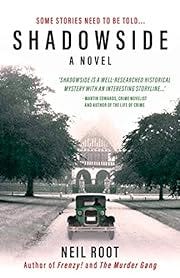
It’s amazing how a strong and ingrained memory- a scene that flashes through your mind from the past –can weave into your imagination. It’s happened to me before, when writing my true crime books, but I know that those scenes in my head while writing in that genre were thankfully rooted in research. But the seed of my first crime novel Shadowside came from a much more personal source.
In the mid-1980s, while my family were living abroad, for a few years I attended a boarding school on England’s south coast which had a large mansion house and extensive grounds. It was a true baptism for me- I arrived there at the age of twelve, and I quickly adapted to being independent and went into survival mode, like all young boarders do.
Books, then as now, helped me through, as I escaped into other worlds. But I had no idea that I would be a writer then- that drive or realisation wouldn’t come until I was in my late teens and early twenties, and it would be years before I became a published author.
In time, I made friends at the school, becoming settled there, or some might say institutionised. It was a world all of its own, not one yet in or from a book, and cut off from the real world I’d known in London and abroad.
I left there after three years, when my family returned to the UK. I didn’t realise then how much that relatively short length of time had changed me, leaving a deep and indelible impression. But now, I understand that through strong memories, that formative time in my life and my environment, as they do for most of us, forged who I am to a significant extent.
When I started writing Shadowside in the summer of 2019, while working in Saudi Arabia in near-fifty-degree Celsius heat (though chilled and air-conditioned inside my apartment), I was a million miles from the memories of the misty, damp and blustery milieu of that school on a clifftop thirty-five years earlier.
Months before, I’d already decided that my book would be set in the past- where for some reason my imagination feels more comfortable. And that it would have a Fleet Street crime journalist as one of its protagonists, a world that I'd already extensively researched and explored in my previous true crime books Frenzy! and The Murder Gang. But I didn’t have that crucial ‘in’ which writers need to enter the imaginative universe when writing a novel.
And then it came in a flashback in my head. It was 1984, or 1985 perhaps, and I was being driven down the school’s long drive to a dental appointment in the local seaside town, my housemaster’s wife at the wheel. I could see myself sitting in that car, as we went past the trees looming overhead, and through to outside the main gates, silence in the car, as always. That pulled the trigger.
But my imagination then transported that memory to almost exactly fifty years earlier, to late 1936, at the time of Kind Edward VIII’s abdication as he chose Wallis Simpson over his birthright and responsibility. And like me, my other protagonist was in that car, going down that same drive, at sixteen, a few years older than I had been, and a psychopath, but the similarities end there!
From there, the story unfolded as I kept writing, and the Fleet Street journalist soon appeared naturally as part of that story. My imagination was unleashed, triggered by a real scene from my past and a very evocative place. It’s amazing how memory and your deep psyche react in the creative process and provide you with the tools to write a work of fiction.
Shadowside is published by Dime Crime Books Shadowside
This article has also appeared in Red Herrings magazine.